By: Brooklyn Nicole
Social media has allowed us to connect with others around the world in an instant. With this new form of connection, creates niche groups of people with shared interests. In the cosmetic industry, these groups talk about tips and tricks, as well as product recommendations. Before social media these groups and conversations were among friends and family, now they are happening between thousands of people all around the world. Social media has changed the way beauty products are advertised to consumers, cosmetic companies have switched from commercial messaging to editorial messaging with the use of influencers. How do these messages affect consumers decisions on making product purchases and how does this affect a consumer’s trust or belief in the company?
Table of Contents
- Table of Contents
- Types of Ads on Social Media:
- How Are These Ads Being Used:
- Effects on Consumers:
- Final Thoughts
Types of Ads on Social Media:
On social media you can see two types of advertisements, which are commercial and editorial messages:
- Commercial messaging: is “an advertisement makes it clear that the intent is to persuade the reader or viewer to change an attitude or behavior”
- Editorial messaging: is an objective and unbiased; the source expresses an opinion or provides information and does not intent to carry out the agenda or an organization.
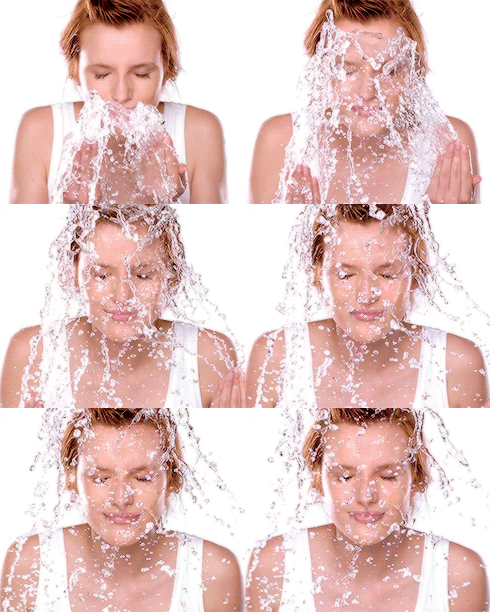
Gif Made By: Neutrogena2
Within the cosmetic industry, I see commercial messaging ads as the typical ads you can see on TV with a woman dramatically splashing her face with water while washing her face. It’s those big production ads that make you believe you can splash water and be 1000x happier with this product. These ads are easy to spot and are trying to get your attention to purchase this product. Editorial messaging to me is a product review that shows you how to use the product and how to incorporate it into your routine, it has a Word of Mouth feel to it. The person recommending the product uses it and loves it and wants people to know about it. These ads are not noticeable unless the person says the brand is sponsoring the video.
How Are These Ads Being Used:
In 2024 you would see these commercial ads for products between posts on your social media feeds or on the side of website you are browsing on. We all hate these kinds of ads because you feel like they are way to personal and are listening to your thoughts about a Hawaiian vacation. They are like that on purpose!
In John Lanchester’s article You Are the Product he discusses how Facebook transitioned from just a social media company focusing on connecting people to a surveillance ad company. Lanchester mentions “These firms know all there is to know about your name and address, your income and level of education, your relationship status, plus everywhere you’ve ever paid for anything with a card. Facebook could now put your identity together with the unique device identifier on your phone.” (Lanchester, 2019).
Social media platforms know what demographic you fit in with based on your likes and dislikes. How would these companies know my personal information if my account is private? With social media, whether your account is private or not when you make an account, you must put identifiers in (gender, age, phone number, etc.). Some of these identifiers will show up in analytics on business accounts on Instagram, Facebook, Pinterest, etc. to track what kind of audience these accounts are getting. Marketing firms use your likes and dislikes to curate the best social feed of advertisements, I call it the “FYP of Ads” which is a mix of commercial and editorial advertisements from the brands themselves and influencers.
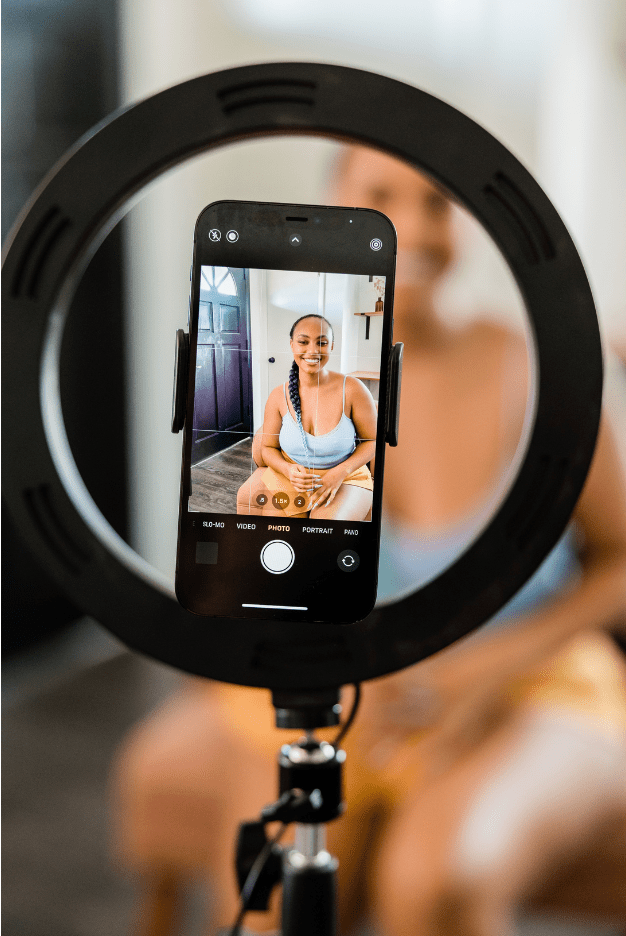
Cosmetic brands use influencer marketing with editorial advertisements. Influencer marketing is a collaboration between the content creator and a company to promote a brand’s product or service to the creator’s audience through social media platforms. Unlike worldwide known celebrity’s influencers are like the middleman between A-listers and “normal” people. Influencers are trusted figures within their niche communities and people who are apart of these groups trust their opinions and ideas. Influencer marketing allows the creator to use their own style of content while
implementing the brand’s messages into the post allowing the brand to target their specific audience at a large scale through multiple influencers. Cosmetic companies are using influencer marketing more and more because of the “widespread distrust of cosmetic advertisements, as they often include exaggerated claims that result in a general lack of trust in brand communication, particularly among more educated consumers” (Da Costa, 2023).
With influencer marketing you are putting the product into the hands of someone consumers trust and allowing them to see how it works and the results.Ida Johansen and Camilla Guldvik’s study on Influencer marketing showed that influencers have more impact than an average person
| Average Person | Influencer | |
| Not Likely | 27% | 18% |
| Highly Likely | 73% | 82% |
Also, influencers are more direct in their recommendations than the general population when recommending something, with 74% encouraging someone to buy or try something compared to 66% of the general population. 17 Influencers are being perceived as more credible, believable, knowledgeable, and they are better at explaining how the product works. Trusting influencers to make these ads with editorial messages looks great on paper for the companies they are working with, but what are the outcomes for the consumers?
Effects on Consumers:
In 2023 what is known as Lash Gate sparked big controversy between Influencers and followers. Mikayla Nogueira made a TikTok product review of a new lengthening mascara; she is seen applying the mascara and then it cuts to another angle showing much longer and fuller lashes. The video blew up to 24.8 million views because people noticed when she cut to the other angle, she had applied false lashes on top in between takes.
This also sparked another controversy that has been going on since 2017, with beauty influencers not properly disclosing if the products they are using in their videos are ads, sponsorships, or were gifted to them by the brand. Without this type of information, a consumer can’t distinguish what they are saying is truth or if they are paid to say this.
“According to a study in 2017 by IZEA, there was a dramatic drop in the number of influencers that disclosed sponsorship between 2015 and 2016.” (Muffolini, 2018). There are currently guidelines and suggestions for influencers to use on how to disclose their sponsored posts. But they are still guidelines and suggestions not laws or rules on the platforms themselves. Putting the responsibility of making ads and sponsored content on the influencers can lead to misleading or falsifying results to the consumer.
In a study done at the University of Porto on the effects of “fake” news advertising for cosmetics, Eduarda da Costa found that the truthfulness of the ad or the sources credibility did not lead to a significant impact on the consumers intentions. However, they found that the consumers drive to try the new product, but the ad’s results had no effect.
Also, they found that the higher educated consumers were the more skeptical and less likely they would be influenced to purchase the products (Da Costa, 2023). The consumers in this study held the power in whether they would buy the product or not, and if they had previous knowledge what to look for with falsified results they were able to make a conclusive decision on whether to buy it or not.
Final Thoughts
Social media has changed the way consumers interact within the beauty industry, with creating online communities to share tips, and product recommendations all around the world. It has also caused a shift with marketing from traditional commercial messaging to influencer editorial messaging, this content has made advertising more personal and relatable for the consumer. However, there are some challenges that need to be overcome. Influencers are seen as trusted sources within their communities, there are controversies like misleading product reviews and the lack of transparency if a post is an ad or sponsorship.
These things have caused consumers to feel skeptical and lose trust with cosmetic companies and influencers. With the advertising on social media being new and loosely regulated, I think the social media platforms should have a responsibility of making sure these social media ads with or without influencers are following a protocol and being properly labeled and checked.
As social media platforms continue to grow, I think it is important to maintain transparency to create trust with consumers and their relationships with influencers and brands. Not only as a cosmetic products consumer myself, it’s really important to always read between the lashes to get a clear picture of what these influencer posts are doing.
How do you feel about Influencer Marketing?
- Da Costa, E. F. B. (2023). What is “fake” in news advertising cosmetics? The impact of fake news on consumers’ intention to purchase and positive word-of-mouth [Dissertation]. https://repositorio-aberto.up.pt/bitstream/10216/154991/2/649508.pdf
- Johansen, I., & Guldvik, C. (2017). Influencer Marketing and Purchase Intentions [Norwegian School of Economics]. https://openaccess.nhh.no/nhh-xmlui/bitstream/handle/11250/2453218/masterthesis.PDF?sequence=1
- Lanchester, J. (2019, December 14). John Lanchester · You are the product: it zucks! London Review of Books. https://www.lrb.co.uk/the-paper/v39/n16/john-lanchester/you-are-the-product
- Muffolini, C. (2018, April 8). Disclosing branded content: What you need to know. influenceTHIS. https://www.influencethis.ca/disclosing-branded-content-canada
- Tuten, T. (2015). Social media marketing: social publishing [PDF]. https://dc.ca.talis.com/okanagan/bundles/66bbc3624d7c85000a0d56c4
Images and Other Media



 Brooklyn Nicole Aesthetics
Leave a comment